The CIOT Just Got Teeth: What Brazil's New Freight Floor Enforcement Means for Your Yard

Updated: Mar 26
President Lula just signed a Medida Provisória that changes everything about freight floor enforcement in Brazil. The big move? Making CIOT registration mandatory for every single delivery.
If you run a terminal, warehouse, or distribution center, this isn't just trucker paperwork. It's about to land directly on your dock.
What Actually Changed
The new MP expands enforcement of Lei 13.103/2018, the law that established minimum freight pricing for road transport. The mechanism is the CIOT (Código Identificador da Operação de Transporte), which now becomes mandatory for documenting every freight delivery.
Transport Minister Renan Filho held a press conference last week, specifically naming companies that have been violating minimum freight requirements. The government is done warning. They're now publishing violator lists and ramping up penalties.
This shifts the compliance burden. Shippers and receivers who can't prove proper freight documentation become targets. Your yard operations are now part of the audit trail.
Why Terminals Should Care
Here's the problem nobody's talking about: when enforcement tightens, truckers slow down.
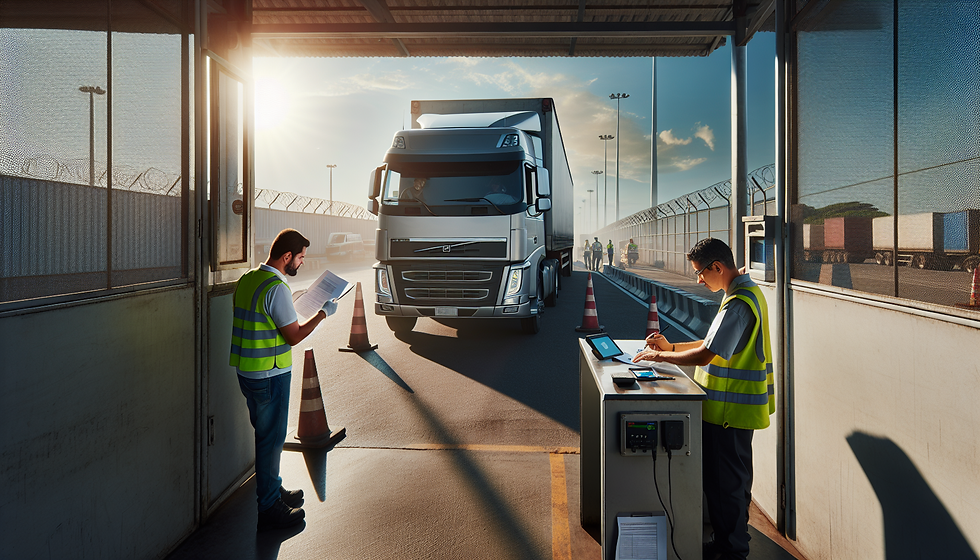
Drivers worried about documentation compliance don't rush through check-in. They double-check paperwork. They ask questions. They wait for confirmations. Every extra minute at your gate multiplies across dozens of daily arrivals.
And if a trucker disputes being paid below floor rates? Your facility's records become evidence. Your timestamps matter. Your dock scheduling data could end up in an ANTT investigation.
Grain terminals during harvest season already operate at the breaking point. Adding documentation friction to an already chaotic yard creates bottlenecks that cascade into detention costs, demurrage charges, and missed shipping windows.
The Documentation Gap
Most Brazilian yards still run on clipboards and WhatsApp groups. That worked when enforcement was loose. It doesn't work when regulators want digital audit trails.
The new rules assume digital infrastructure that many facilities simply don't have. How do you prove a truck arrived at 14:32 and departed at 16:15 if your records are handwritten in a guard's notebook?
This is exactly why we built Volmera YMS. Every truck movement gets timestamped automatically. Every dock assignment creates a record. When an auditor asks for freight documentation, you have exportable data instead of scrambling through paper logs.
The Bigger Picture
Brazil's freight industry exists in constant tension between formalization and flexibility. Truckers want guaranteed minimums. Shippers want competitive rates. Terminals get caught in the middle.
Lei 13.103 tried to balance this seven years ago. The new MP admits the original law had no teeth. Now it does.
For yard operators, the question isn't whether to comply. It's whether your operations can handle the administrative overhead without grinding to a halt. Digital yard management isn't a luxury anymore. It's becoming a regulatory necessity.
The companies Minister Renan Filho named last week probably thought they were operating normally. They weren't prepared for enforcement to actually happen.
Is your yard ready for the moment an inspector asks for your truck movement records from last Tuesday?